
Repair guide
Robotic Machinery Repair: From Symptom to Handoff
April 28, 2023
By DeLouie Industrial
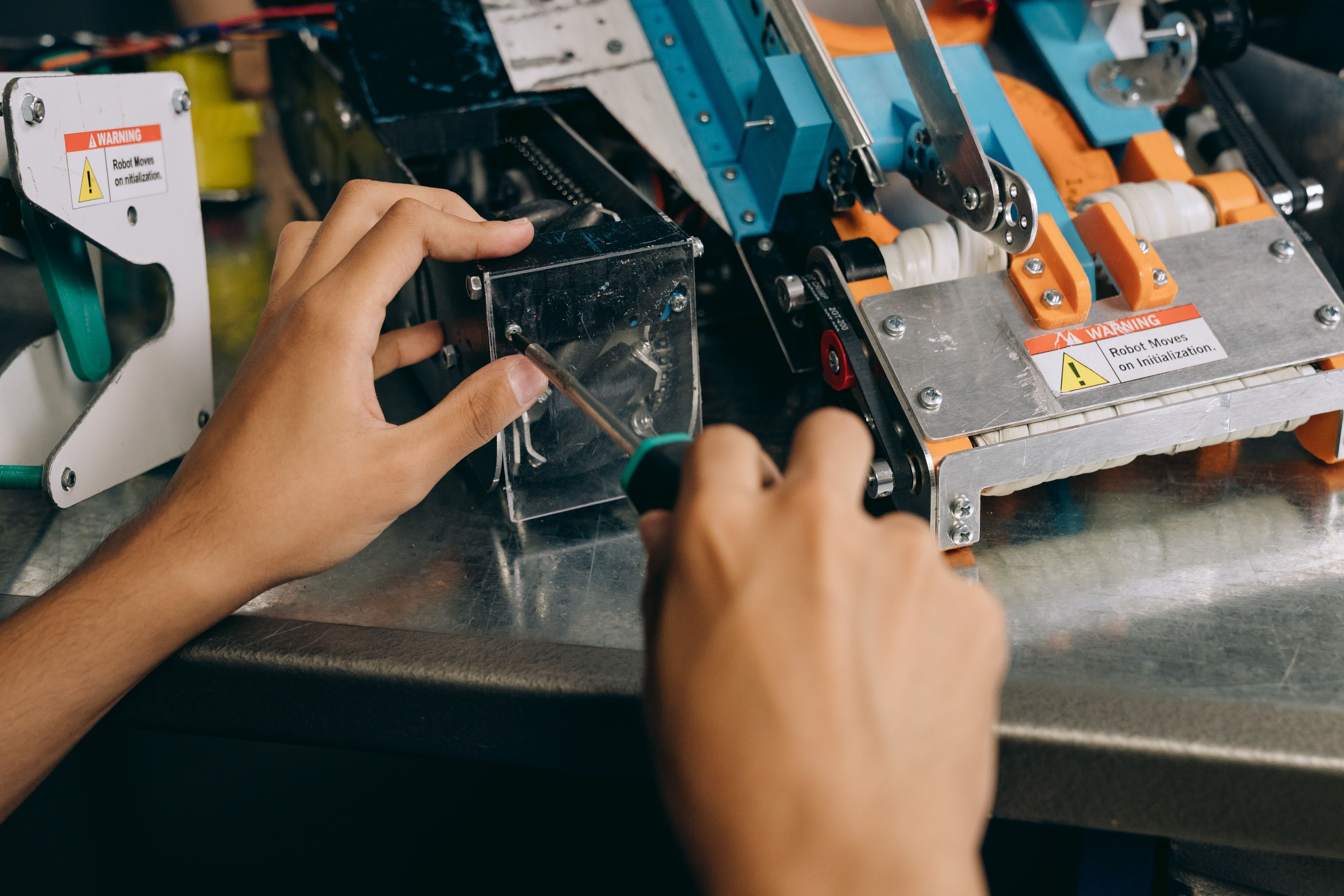
Maintenance guide
Robotic equipment combines mechanical movement, tooling, utilities, and controls, so a careful repair plan starts with the symptom and the conditions around it.
Capture what the machine actually did
A robot or automated machine can stop for many different reasons, and the first report is often broad: it faulted, stopped, or would not complete a cycle. Start by recording the sequence. What command or job was active? Where in the movement did it stop? Was the condition repeatable? Did the operator notice a change in sound, force, position, speed, or product handling?
Preserve useful information before resetting or changing the machine when the site’s process allows it. Fault messages, photos of the stopped position, recent work, tooling changes, and the last known good cycle can help separate a new failure from an existing setup or operating issue.
Respect the boundary between systems
Robotic equipment has mechanical assemblies as well as cables, hoses, tooling, guarding, sensors, and controls. A repair review should consider how those systems interact without assuming that a mechanical symptom has a single cause. Look for interference, loose or damaged connections, abnormal wear, contamination, restricted travel, and changes around the end effector or work area where those checks are safe and permitted.
Isolation and stored-energy controls are essential. Do not enter the robot’s work envelope, bypass a guard, or reset a fault as a substitute for the site’s established procedure. If the condition affects movement or guarding, the responsible site personnel must define the safe access and verification steps before repair work begins.
- Last known good cycle and exact point where the condition appeared
- Fault messages, stopped position, tooling, and recent changes
- Visible condition of mechanical interfaces, cables, hoses, and guarding
- Required isolation, access, verification, and controlled test sequence
Repair in a sequence that can be tested
A repair plan should identify the affected assembly, the surrounding equipment that could be involved, and the evidence that will show whether the work changed the condition. Keep removed parts and findings organized when they may help explain the failure. If an adjustment is made, record the original condition and the reason for the adjustment.
Testing should be staged and appropriate to the equipment. Start with the checks required before movement, then progress through controlled operation and the relevant production or service cycle. The people responsible for the robot and the site’s controls should determine the permitted test conditions.
Leave the next person a usable record
A good handoff includes the reported symptom, the inspection findings, the work completed, the parts or adjustments involved, and the result of the approved checks. Note anything that remains to be monitored or any follow-up that needs a planned service window.
DeLouie Industrial supports machinery repair with attention to fit, alignment, connections, operation, and clear handoff notes. The aim is not only to make the machine move again; it is to make the next maintenance decision better informed.
Working checklist
Turn the next service visit into useful information.
- 01Record the last known good cycle and exact point of the stop.
- 02Preserve fault information and note recent changes before resetting where permitted.
- 03Define the required isolation and access controls before inspection.
- 04Review mechanical, utility, guarding, and control interfaces together.
- 05Test in a staged sequence approved for the equipment and site.
- 06Document the repair, result, and any monitoring or follow-up required.
This guide is general information. Site-specific work must follow the equipment documentation, the site's procedures, and the requirements of the people responsible for the work area.
Related service
Machinery Repair
Diagnose worn, damaged, or misaligned equipment and address the components that affect safe, dependable operation. From precision bench work to larger machinery, repair starts with understanding the failure.